
The Indian Ocean Tax Advantage
Wealth and Tax | Indian Ocean

There is a conversation happening in South African wealth management circles that is not happening loudly enough in public. It is a conversation about the Indian Ocean — specifically about Mauritius — as the most significant legitimate tax and asset structuring opportunity available to South African high-net-worth individuals, entrepreneurs and family offices.
Not a conversation about leaving South Africa. Not about abandoning assets or relationships or the country that built the wealth. A conversation about the intelligent, entirely legal management of international assets, international income and international structures in a jurisdiction that has spent thirty years building exactly the infrastructure that makes this possible.
The conversation starts with a simple observation. South Africa has a residence-based tax system that taxes South African tax residents on their worldwide income at rates that reach 45 percent for individuals and are accompanied by significant complexity around foreign income, foreign assets and the reporting obligations that attach to both.
Mauritius has a territorial tax system with a flat income tax rate of 15 percent, no capital gains tax, no inheritance tax, no wealth tax and a network of double taxation agreements with 46 countries including South Africa, the United Kingdom, France, India and China.
The difference between those two tax environments, applied to the management of international income over a decade, is not marginal. It is potentially transformational.
The structures that make this work.
The most commonly used structure for South African investors accessing the Mauritius tax environment involves the establishment of a Mauritius holding company or Global Business Company through which international investments and income are managed. This structure is entirely legal, extensively regulated by the Mauritius Financial Services Commission and widely used by South African, European and Asian investors as a legitimate mechanism for tax-efficient wealth management.
The key principle is that the tax advantage is accessed by the Mauritius entity on income that is genuinely managed through that entity from Mauritius. It is not a mechanism for restructuring South African domestic income or assets. It is a structure for managing genuinely international capital — investments in multiple jurisdictions, income from international clients, assets held outside South Africa — in a more tax-efficient manner than managing them directly from South Africa.
The property dimension.
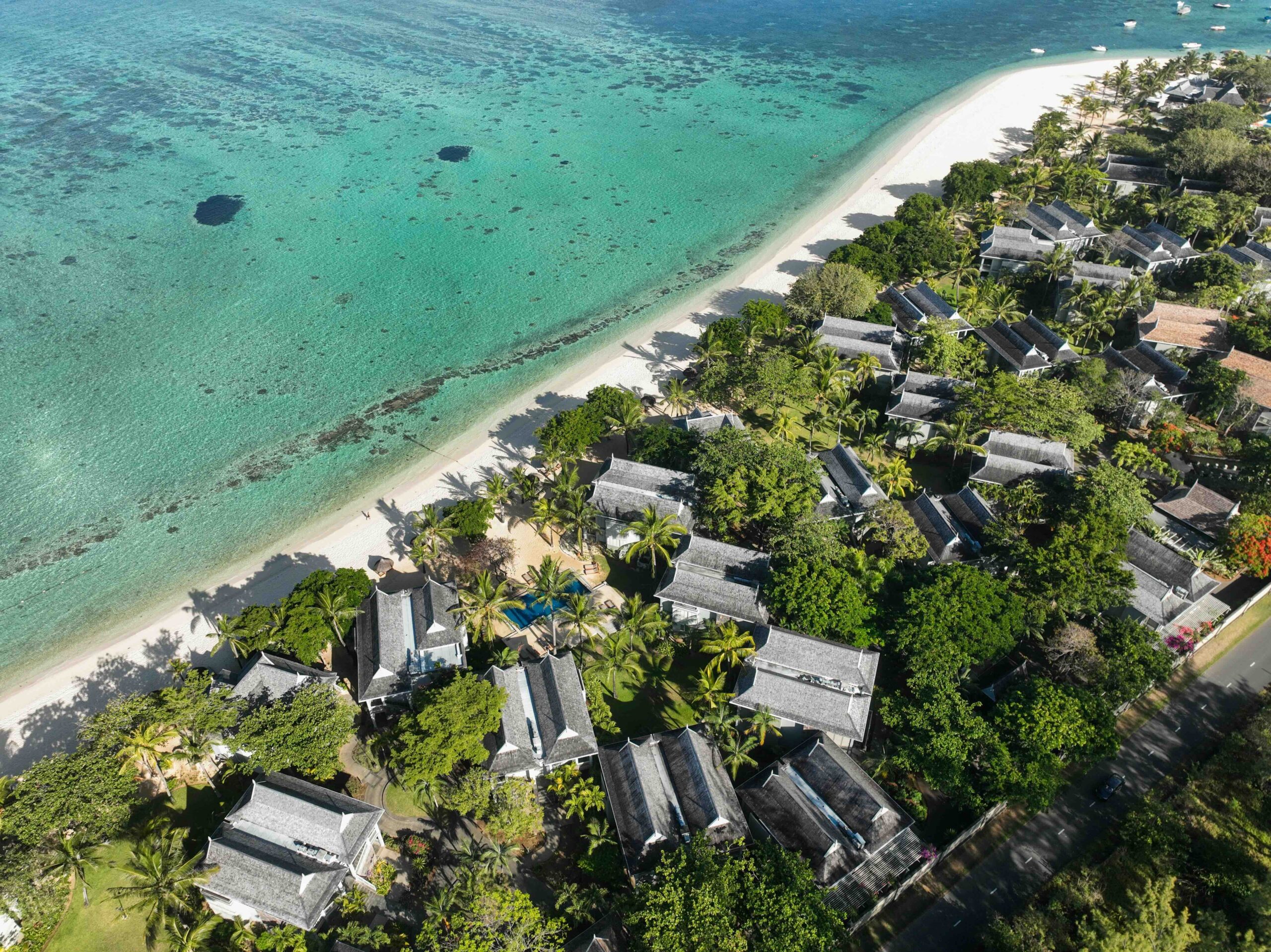
The Mauritius property market intersects with this tax opportunity in a specific and commercially significant way. Foreign buyers who purchase qualifying property in Mauritius above the relevant investment threshold receive permanent residency — giving them the legal basis to establish genuine Mauritius tax residency alongside their South African position.
This matters because genuine Mauritius tax residency — not just property ownership but actual residency with the substance that the tax authorities in both jurisdictions require — changes the tax conversation significantly. A South African investor who has established genuine Mauritius tax residency, who spends the required time in Mauritius, who has their genuine centre of economic interest there and who has the documentation to demonstrate all of the above is not in the same tax position as a South African investor who merely owns a Mauritius property.
The distinction between ownership and residency is one that many buyers of Mauritius property do not understand clearly enough when they make their purchase decision. The property is an asset. The residency is a status. Both have value. They are not the same thing and they do not automatically accompany each other.
What the IRS, PDS and RES schemes actually offer.
Mauritius has three main mechanisms through which foreign buyers can purchase freehold property — the Integrated Resort Scheme, the Property Development Scheme and the Real Estate Scheme. Each has specific requirements around the nature of the development, the minimum investment threshold and the ancillary rights that attach to the purchase.
The permanent residency right that attaches to qualifying purchases under these schemes is genuine. It is not a temporary or conditional permission. It gives the holder the right to live, work and retire in Mauritius indefinitely. For a South African family building a second base, establishing genuine dual presence or planning for retirement in a more stable environment this residency right has significant value independent of the property itself.
The professionals who matter.
The complexity of this landscape — the interaction between South African tax law, Mauritius tax law, the double taxation agreement between the two countries, the foreign exchange control regulations that govern how South Africans move capital offshore and the Mauritius financial services framework that governs how structures are established and maintained — means that independent professional advice is not optional.
The right team includes a South African tax advisor who understands cross-border structuring, a Mauritius-based lawyer who specialises in foreign investment and property law, and a Mauritius financial services professional who can establish and administer the appropriate structures. The cost of this team is modest relative to the amounts being structured and the tax positions being established. The cost of getting it wrong — through uninformed decisions, incomplete structures or inadequate substance — is significantly higher.
The conclusion that the numbers support.
The Indian Ocean tax advantage is real. Mauritius has built a genuine, internationally respected, extensively regulated infrastructure for the tax-efficient management of international wealth. South African investors with genuinely international assets and income have legitimate and significant reasons to engage with that infrastructure thoughtfully.
The buyers who have done this properly — who have taken independent advice, established genuine structures with genuine substance and made property and residency decisions that serve their actual objectives — have built positions that deliver multiple forms of return simultaneously. Financial return on the property. Tax efficiency on their international wealth. Lifestyle return on the residency. And the permanent optionality of having a second base in one of the world's most beautiful and most stable jurisdictions.
The conversation is happening. The question is whether you are part of it.