
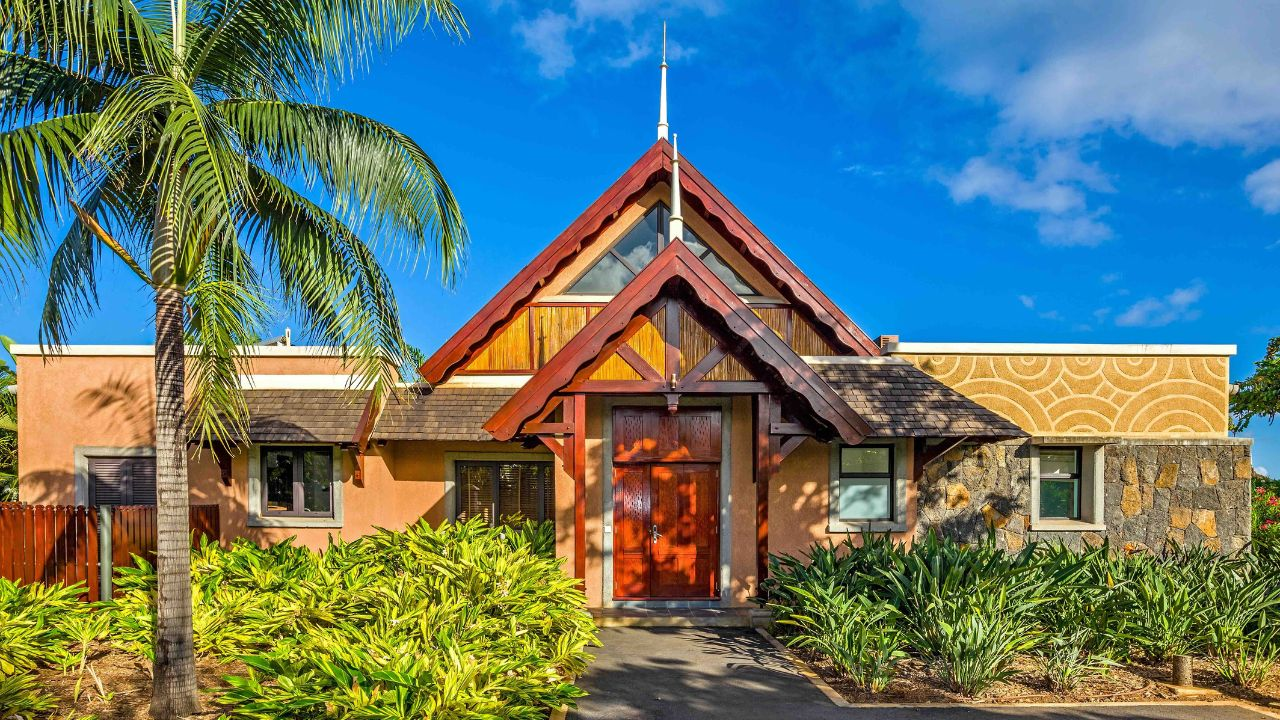
The family office view: How institutional Indian Ocean buyers think differently
There is a category of Indian Ocean property buyer that most market analysis does not adequately capture. Not the lifestyle buyer seeking a beach villa for personal use. Not the yield-focused investor seeking rental returns. The family office buyer managing multi-generational wealth for whom Indian Ocean property serves a function that has nothing to do with lifestyle and very little to do with conventional investment returns.
These buyers purchase property in the Seychelles, Mauritius and the Maldives for reasons that are invisible to conventional property analysis. Understanding how family offices think about Indian Ocean real estate reveals why certain properties trade at premiums that make no sense from a yield perspective and why some of the region's most significant transactions happen quietly without ever appearing in public market data.
What family offices actually are and how they operate.
A family office is a private wealth management entity serving a single family or a small group of ultra-high-net-worth families. The threshold for establishing a dedicated family office typically begins around USD 100 million in investable assets though some families wait until they reach USD 500 million or more before the operational complexity justifies the infrastructure cost.
Family offices manage the full spectrum of family wealth — financial investments, private equity holdings, property portfolios, tax planning, estate planning, philanthropy and in some cases operational businesses. The defining characteristic is that the office serves the family exclusively rather than managing assets for multiple external clients like a traditional wealth management firm.
The time horizon is multi-generational. The family office is not managing wealth to maximise returns over the next three years or five years. It is managing wealth to be transferred across generations while preserving capital, minimising taxation and avoiding the wealth destruction that affects most family fortunes by the third generation.
This fundamentally changes how property investment is evaluated. The individual buyer purchasing a Mauritius IRS villa cares about lifestyle amenities, rental yield and capital appreciation over a five to ten year holding period. The family office purchasing the same villa cares about legal structure permanence, succession law certainty, tax efficiency across multiple jurisdictions and the asset's role in a diversified portfolio designed to survive political and economic disruption across decades.
The properties family offices buy versus what individual buyers choose.
The family office approach to Indian Ocean property is selective in ways that reflect objectives fundamentally different from individual buyer priorities.
Family offices favour jurisdictional stability over lifestyle amenities. A property in Mauritius with strong rule of law, predictable succession law under the French civil code, and permanent residence rights attached is more valuable than a property in a jurisdiction with better beaches but weaker legal infrastructure. The family office is not purchasing the beach. It is purchasing the legal framework that protects multi-generational wealth transfer.
Family offices favour freehold ownership over leasehold regardless of the lease term. A 99-year lease may be functionally equivalent to freehold for an individual buyer planning a ten year hold. For a family office planning across three generations a 99-year lease is a depreciating asset that will require renegotiation during the family's expected ownership period. Freehold is permanent. Leasehold is contingent. That distinction matters.
Family offices favour properties that enable residence and citizenship pathways even when the family has no immediate intention to relocate. The Mauritius IRS property grants permanent residence rights. The family may never exercise those rights. But the option to relocate family members to Mauritius if political or economic conditions in their home jurisdiction deteriorate has value that cannot be quantified through conventional investment analysis.
Family offices favour privacy and discretion over branded developments and high-profile locations. The ultra-wealthy family managing multi-generational capital does not want their property holdings visible in marketing materials or subject to public attention. They prefer properties acquired through quiet transactions in jurisdictions that protect ownership privacy rather than developments marketed internationally with extensive public exposure.
Family offices favour properties that can be held in trust structures or corporate entities that facilitate estate planning and minimise succession complexity. The individual buyer purchasing in their personal name faces probate, estate taxation and succession law complexity. The family office purchasing through a properly structured entity eliminates much of that complexity and creates smoother generational transfer.

Multi-generational wealth preservation and why the Indian Ocean matters.
The family office's interest in Indian Ocean property is grounded in geographic and jurisdictional diversification that individual buyers rarely need but that multi-generational wealth requires.
Wealth concentrated in a single jurisdiction faces risks that diversified wealth avoids. Political instability, currency devaluation, expropriation, or regulatory changes that make wealth transfer complicated can destroy family fortunes. The families that preserve wealth across generations are those that diversify across jurisdictions and hold assets in stable, legally predictable environments.
The Indian Ocean offers jurisdictional diversity that complements traditional wealth preservation jurisdictions. A European family with wealth concentrated in London, Zurich and Luxembourg gains diversification by holding property in Mauritius with its Commonwealth legal framework and tax treaty network. A Middle Eastern family with wealth in Dubai and London gains diversification by holding property in the Seychelles with its unique environmental protections and offshore financial infrastructure.
The property is not the investment. The jurisdiction is the investment. The villa in Mauritius or the Seychelles is the vehicle for establishing legal presence, residence rights and asset ownership in a jurisdiction that offers stability and predictability the family's primary residence jurisdiction may not provide indefinitely.
The family office approach to this is systematic. They do not purchase a single property opportunistically. They analyse which jurisdictions offer the legal framework, political stability and succession law certainty their wealth preservation strategy requires. They identify properties in those jurisdictions that provide residence rights, citizenship pathways or legal structures that support multi-generational transfer. And they acquire those properties as part of a deliberate geographical diversification strategy.
Privacy, succession and the long view.
The family office's operational approach to property ownership reflects values that individual buyers rarely prioritise.
Privacy is non-negotiable. Family offices structure property ownership through corporate entities, trusts or foundations that obscure the ultimate beneficial ownership. The property may be held by a Mauritius-incorporated company, a Seychelles IBC or a trust established in a jurisdiction with strong asset protection laws. The family's name does not appear in public registries. Their wealth remains private.
This creates transaction complexity that individual buyers avoid. The seller must be willing to transact with a corporate buyer. The jurisdiction must permit corporate or trust ownership. The legal and tax advisors must structure the acquisition to satisfy both the jurisdiction's requirements and the family's broader wealth planning strategy. The transaction costs are higher but the privacy protection is absolute.
Succession planning drives much of the family office's property structuring. The property must transfer across generations without triggering probate, estate taxation or family disputes that destroy wealth. The family office uses trusts, foundations and corporate structures that enable smooth transfer according to predetermined rules rather than leaving succession to will interpretation or local succession law.
Mauritius properties benefit from this because Mauritian law permits holding property through offshore structures while maintaining the IRS residence rights. The Seychelles permits similar structuring through its International Business Company framework. The jurisdictions that restrict ownership to individuals or impose complex approval processes for corporate ownership are less attractive to family offices regardless of the property's other characteristics.
The long view means family offices tolerate illiquidity and accept capital appreciation timelines that would frustrate individual investors. A property purchased in 2024 may not appreciate substantially until 2040 or 2050. The family office is not concerned. The investment is not measured in years. It is measured in generations. The property's value is not its current market price. The property's value is its role in preserving capital across decades of political, economic and regulatory change.
The specific Indian Ocean markets that family offices favour.
Family offices do not approach the Indian Ocean as a single market. They evaluate each jurisdiction against specific criteria and concentrate in markets that meet institutional requirements.
Mauritius attracts the highest family office activity because it offers the combination of legal framework strength, tax treaty network breadth, and residence-by-investment clarity that family offices require. The IRS framework provides permanent residence. The tax treaties with India, South Africa and major European jurisdictions enable tax-efficient structuring. The Commonwealth legal system provides jurisprudence predictability. The combination makes Mauritius the institutional favourite.
The Seychelles attracts family offices seeking privacy and environmental uniqueness. The jurisdiction's offshore corporate structures enable ownership privacy. The environmental regulations create scarcity that protects long-term value. The small scale of the market means transactions can happen quietly. Family offices seeking absolute discretion favour the Seychelles over more public markets.
The Maldives attracts family offices focused on ultra-luxury and environmental scarcity. The new freehold ownership framework within integrated resorts creates opportunities that did not exist historically. The family offices moving into Maldives branded residences are purchasing not for yield but for permanent access to an environment that cannot be replicated. The price points — USD 5 million to USD 15 million — reflect scarcity value that family offices understand even when individual buyers do not.
Réunion attracts European family offices seeking EU property ownership in the Indian Ocean. The French legal framework, the euro currency and the certainty of French succession law create a structure that European wealth particularly values. The market is small and the properties lack the luxury positioning of Mauritius or the Seychelles but the legal certainty is absolute.
What Malik thinks.
Family office buyers operate in the Indian Ocean property market with objectives that conventional market analysis does not capture. They are not maximising rental yield. They are not speculating on capital appreciation. They are preserving multi-generational wealth through geographic diversification, jurisdictional stability and legal structures that enable smooth succession.
The properties family offices purchase often look expensive relative to comparable properties in markets with higher liquidity or better rental yields. That is because the family office is not purchasing comparable properties. They are purchasing legal structure, residence rights, succession law certainty and jurisdictional diversification that markets with higher liquidity do not provide.
The individual buyer evaluating Indian Ocean property should understand that they are competing in some segments against family office buyers whose valuation criteria are fundamentally different. A Mauritius IRS property or a Seychelles private island that looks overpriced relative to Gulf yields may be correctly priced relative to the jurisdictional stability and legal certainty it provides to a family office managing multi-generational wealth.
The buyers who understand this will make better decisions about which Indian Ocean markets to target and which properties to pursue. The markets that family offices favour — Mauritius for legal structure, the Seychelles for privacy, the Maldives for scarcity — are markets where conventional investment analysis will consistently undervalue properties because conventional analysis does not price jurisdictional permanence or multi-generational succession planning.
The Indian Ocean is becoming an institutional wealth preservation destination. The family offices moving capital into the region are the early evidence of that transformation. The individual buyers who recognise what that means will understand why certain properties trade at premiums that make no sense from a lifestyle or yield perspective — and will make better decisions about whether they are competing for properties that serve their objectives or properties designed for buyers with fundamentally different needs.