
Mohamed Alabbar: Building Beyond the Burj Khalifa
Middle East
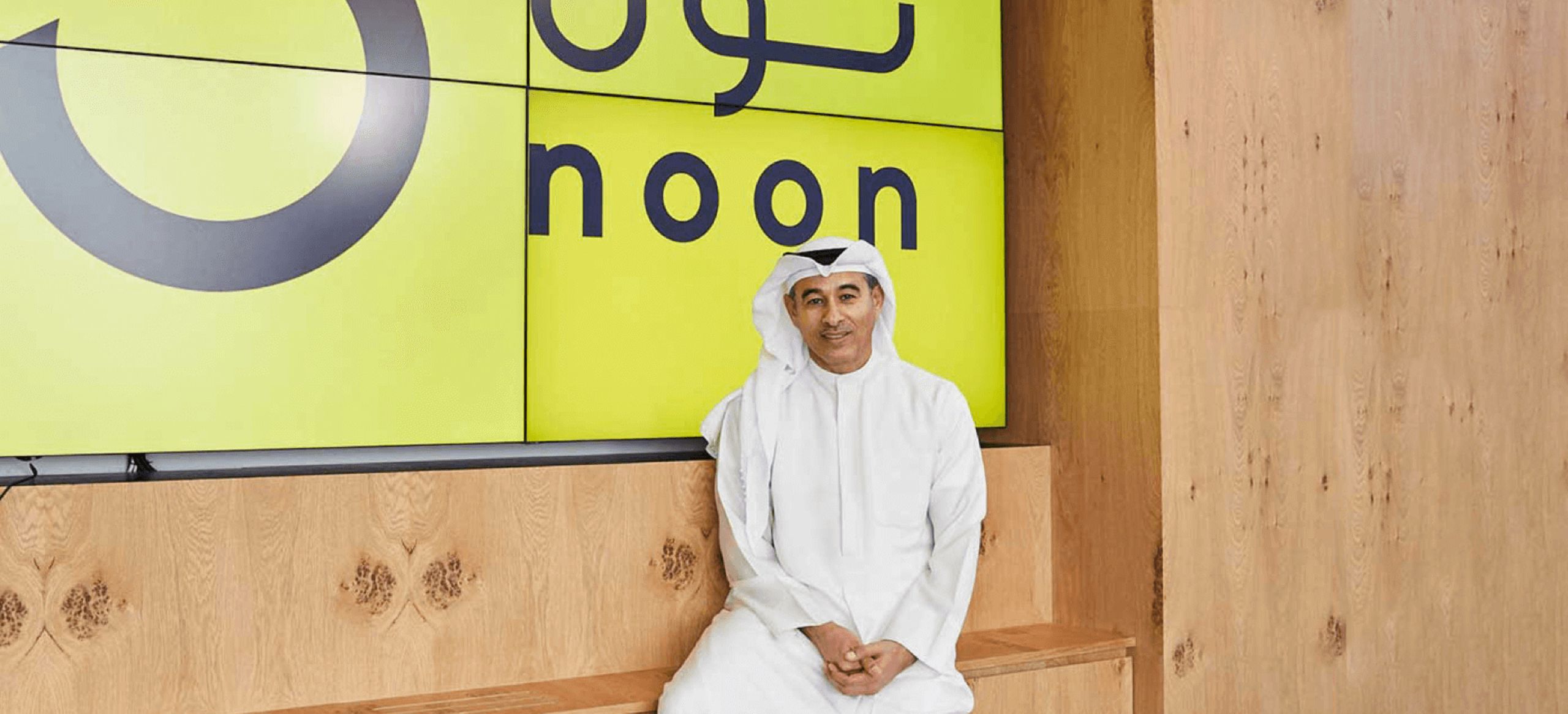
Mohamed Alabbar : The Man Who Built Dubai and What He's Building Next
There is a specific category of individual whose work becomes so embedded in a city's physical identity that it is impossible to separate the two. Robert Moses in New York. Haussmann in Paris. And Mohamed Alabbar in Dubai.
Alabbar did not build Dubai. But he built the parts of Dubai that the world recognizes. The Burj Khalifa. Downtown Dubai. Dubai Mall. The projects that turned a regional trading hub into a global city and that created the physical infrastructure for the internationally mobile lifestyle that now defines what Dubai offers.
His current net worth sits at $2.3 billion according to Forbes' March 2025 estimates. That places him second on the Forbes Middle East list of Most Impactful Real Estate Leaders, behind only Hussain Sajwani. But Alabbar's influence cannot be measured by net worth alone. His impact is architectural, economic, and cultural in ways that extend well beyond the balance sheet.
What Emaar actually built.
Alabbar founded Emaar Properties in 1997. That was a year before the 1998 financial crisis, two years before Dubai granted freehold ownership rights to foreigners, and four years before the September 11 attacks reshaped global capital flows and made Dubai's stability and openness suddenly valuable in ways that had not previously been recognized.
The Burj Khalifa—828 metres, the world's tallest building—opened in 2010. It was not the tallest building because Dubai needed a tall building. It was the tallest building because Dubai needed a symbol that announced to the world that the city's ambition was genuine and that its transformation was irreversible.
Downtown Dubai, the mixed-use development anchored by Burj Khalifa and Dubai Mall, became the city's commercial and cultural centre. Dubai Mall is not just a shopping centre. It is one of the world's most-visited destinations, attracting more than 100 million visitors annually. That figure is not tourism marketing. That is actual foot traffic through a single commercial development.
Dubai Hills Estate. Dubai Creek Harbour. Arabian Ranches. Emaar's master-planned communities are where most of Dubai's internationally mobile families actually live. These are not trophy assets designed for Instagram. These are functional residential environments designed for daily life—schools, parks, retail, and the infrastructure that makes family life possible in a city built on sand and ambition.
The Oasis and what it signals.
In 2024, Emaar unveiled The Oasis, a luxury community that will cover 9.2 million square metres and include 7,000 residential units—townhouses, villas, and what the project documentation describes as super-mansions. This is not incremental development. This is Emaar betting that Dubai's luxury market has the depth to absorb a master-planned community at a scale that would be considered ambitious even by Dubai's standards.
The project's positioning is instructive. The Oasis is not competing with Dubai Hills Estate or Arabian Ranches. It is competing with Palm Jumeirah, Emirates Hills, and the ultra-premium developments that cater to buyers whose wealth is measured in hundreds of millions, not tens of millions.
For Alabbar and Emaar, The Oasis represents a recognition that Dubai's luxury market has matured to the point where it can support products at a scale and price point that would not have been viable even five years ago. The internationally mobile buyer who wants a Dubai address but does not want the density of Downtown Dubai or the resort character of Palm Jumeirah is the buyer The Oasis is designed for.
Dubai Square and the commercial bet.
Emaar has also finalized designs for Dubai Square, a mega shopping and entertainment complex at Dubai Creek Harbour. This is not a response to market undersupply. Dubai already has Dubai Mall, Mall of the Emirates, and a retail infrastructure that exceeds what most global cities can support. Dubai Square is a bet that the city's population growth and its role as a regional hub will generate demand that existing infrastructure cannot fully absorb.
The risk is that Dubai's retail market is already saturated and that Dubai Square will struggle to achieve the tenant mix and foot traffic that justify the investment. The countervailing view is that Dubai's population is projected to continue growing and that the city's role as a global crossroads for tourism, business, and transit means that retail demand is more resilient than it appears.
For Alabbar, Dubai Square is consistent with the broader Emaar strategy that has defined his career: build at a scale that seems ambitious when announced but that market conditions eventually vindicate.
The international retail empire.
Alabbar's influence extends well beyond Dubai. Over the years, he has developed mixed-use projects and retail businesses across more than 20 markets in the Middle East, North and Sub-Saharan Africa, Central and Eastern Europe, South and Southeast Asia, and the United States.
This global footprint is not an accident. It is a deliberate strategy to diversify Emaar's geographic risk and to capture value in markets where the same master-planning and retail expertise that worked in Dubai can be deployed in environments where that expertise is scarce.
The results have been mixed. Some of Emaar's international ventures have performed well. Others have struggled. But the aggregate effect has been to position Emaar as one of the few Gulf developers with genuine international scale and operational credibility outside the Middle East.
What the $2.3 billion net worth represents.
Alabbar's $2.3 billion net worth makes him the second-wealthiest property developer in the UAE, behind Hussain Sajwani's $10.2 billion. But the comparison is not straightforward. Sajwani's wealth is concentrated in DAMAC, a company that has delivered extraordinary returns to its founder by focusing on branded luxury residences in Dubai.
Alabbar's wealth is distributed across Emaar Properties, Emaar Malls, and his various international ventures. The portfolio is more diversified, more complex, and arguably more resilient to market shocks than a portfolio concentrated in a single asset class in a single geography.
For the internationally mobile buyer evaluating Dubai property, Alabbar's Emaar represents a specific proposition. It is not the most innovative developer. It is not the most aggressive. But it is the most institutionalized, the most financially stable, and the most consistent in terms of delivery track record.
When you buy an Emaar property, you are buying a product from a company that has been delivering projects in Dubai for more than 25 years and that has the operational infrastructure to manage everything from sales to handover to post-delivery service. That institutional depth matters when the alternative is a boutique developer whose survival depends on the success of a single project.
What Malik thinks.
Mohamed Alabbar's legacy is already written into Dubai's skyline. The Burj Khalifa, Downtown Dubai, and Dubai Mall are permanent contributions to the city's identity. What happens next is more interesting than what has already happened.
The Oasis is Alabbar's bet that Dubai's luxury market is deep enough to absorb a 9.2 million square metre master-planned community targeting ultra-high-net-worth buyers. Dubai Square is his bet that the city's retail market can support another mega-development even as e-commerce reshapes consumer behavior globally.
These are not safe bets. They are calculated risks that could fail if market conditions shift or if Dubai's growth trajectory slows. But they are consistent with the strategy that has defined Alabbar's career: build at a scale that seems ambitious, trust that the market will grow into the supply, and deliver consistently enough that buyers trust you to do it again.
For the internationally mobile buyer, Emaar represents institutional credibility in a market where that credibility is not universal. The projects are not always the most innovative or the most exciting. But they are delivered. They function. And when you buy into an Emaar community, you are buying into an operational infrastructure that will still be functioning ten years from now.
That is worth something. For some buyers, it is worth everything.