
Living Next to the Louvre
Middle East | Residency
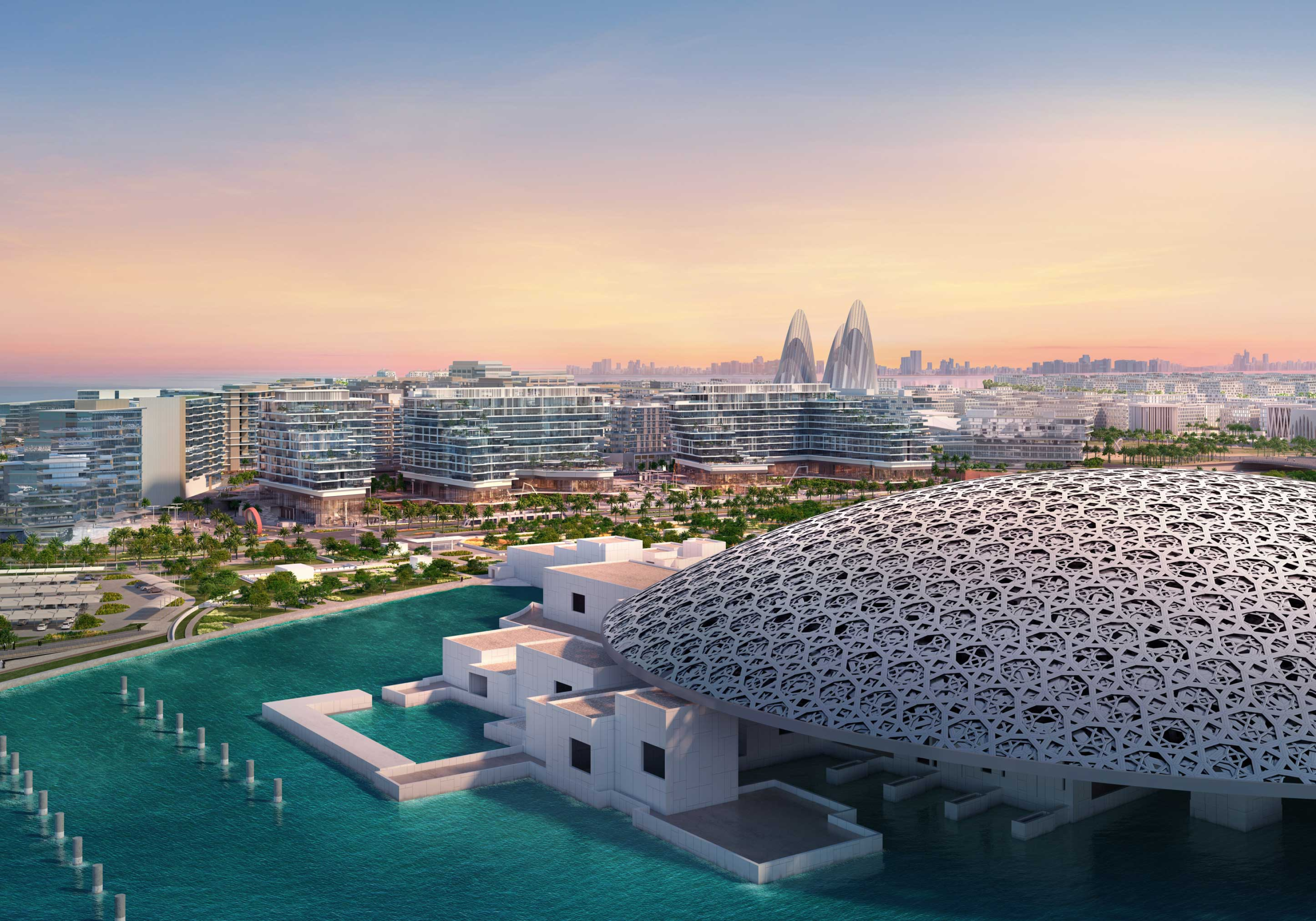
Living next to the Louvre — why Abu Dhabi's most culturally ambitious address is also one of its most intelligent property investments
There is a specific type of property that transcends the category of real estate and becomes something more difficult to define. Not just a home. Not just an investment. An address that carries a meaning independent of the square metres it contains and the view it commands. An address that tells the world something about who you are and what you value before you have said a single word.
Louvre Abu Dhabi Residences is that address.
Developed by Aldar Properties — Abu Dhabi's most significant real estate developer and the company that has shaped more of the emirate's physical identity than any other — in collaboration with the Louvre Abu Dhabi itself, the project sits on Saadiyat Island within the Cultural District that Abu Dhabi has spent two decades and extraordinary capital building into one of the world's great concentrations of cultural infrastructure.
The Louvre Abu Dhabi is not a hotel name or a lifestyle brand borrowed to add marketing gloss to a residential development. It is one of the world's great museums — the result of a thirty-year agreement between the UAE and the French Republic, housing a permanent collection that spans human civilisation from its earliest moments to the contemporary world, housed in a building by Jean Nouvel that has been described as one of the most significant works of architecture of the twenty-first century.
To live next to it is a specific and genuinely unusual proposition.
What is being offered.
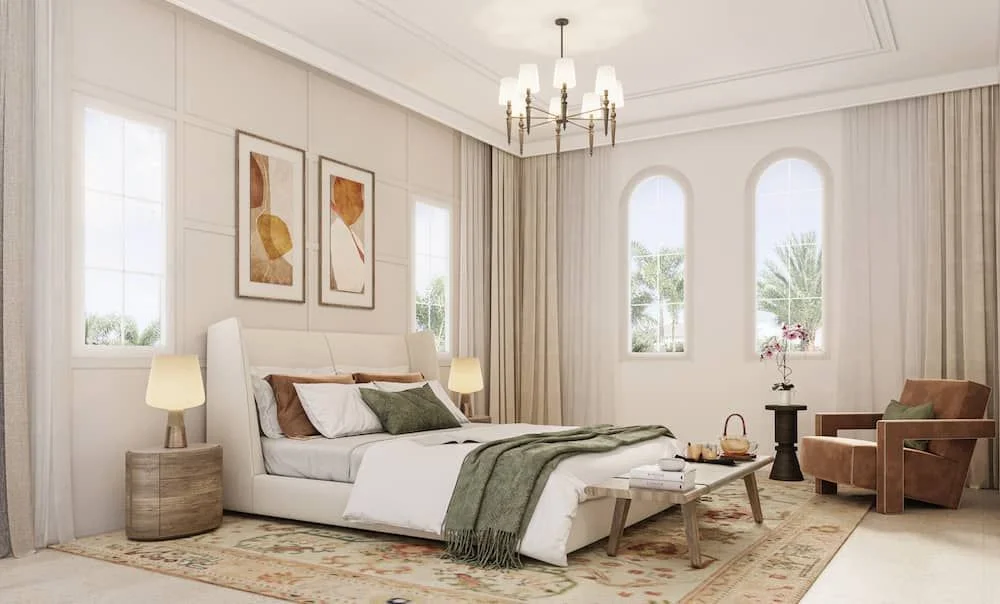
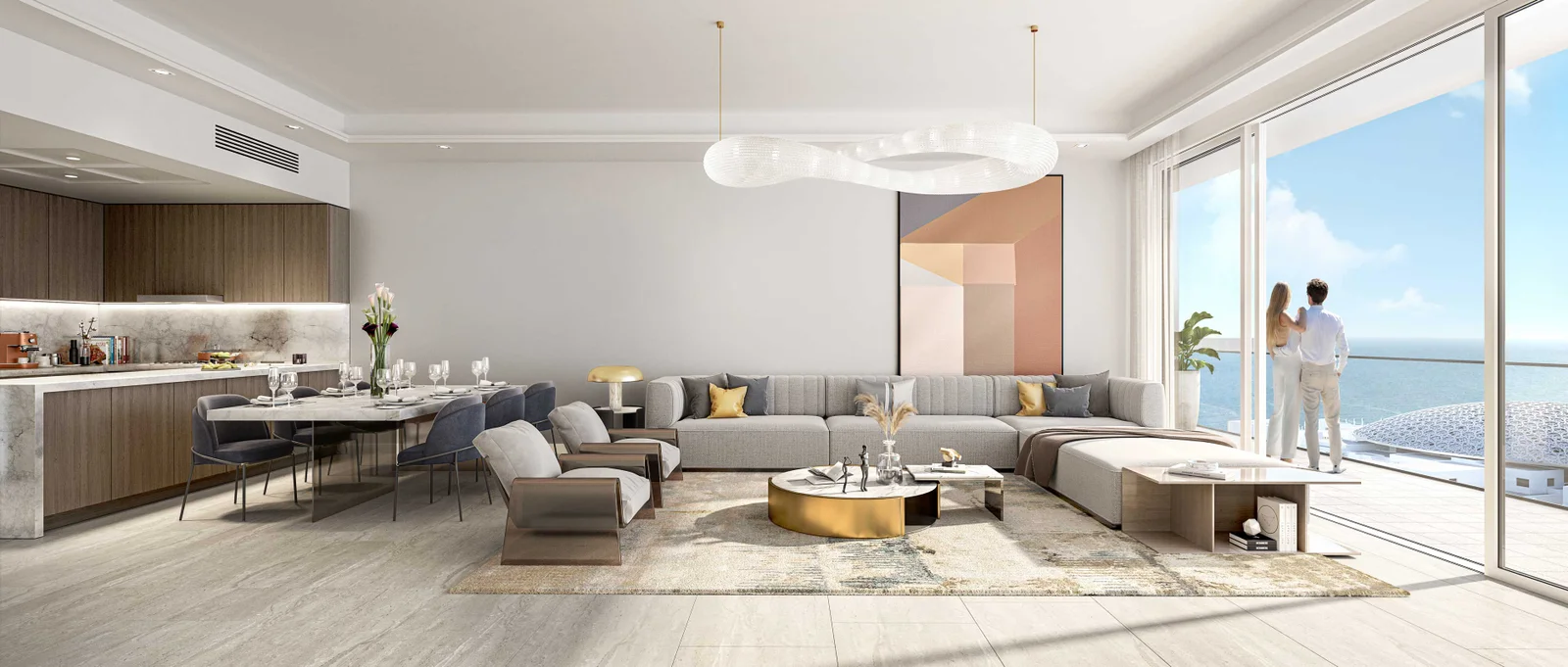
Four hundred residences across studios, one, two and three bedroom apartments and five penthouses. Freehold for all nationalities — the specific regulatory provision that opens this development to the South African, Indian, British and Australian buyer without the ownership restrictions that apply in some other Gulf markets.
Launch pricing begins at AED 1,113,000 — approximately $300,000 at current exchange rates — for studios, with larger configurations priced accordingly. For a freehold residence on Saadiyat Island in Abu Dhabi's Cultural District, adjacent to one of the world's great museums, that entry point deserves attention from buyers who understand what Saadiyat Island represents and where it is in its development trajectory.
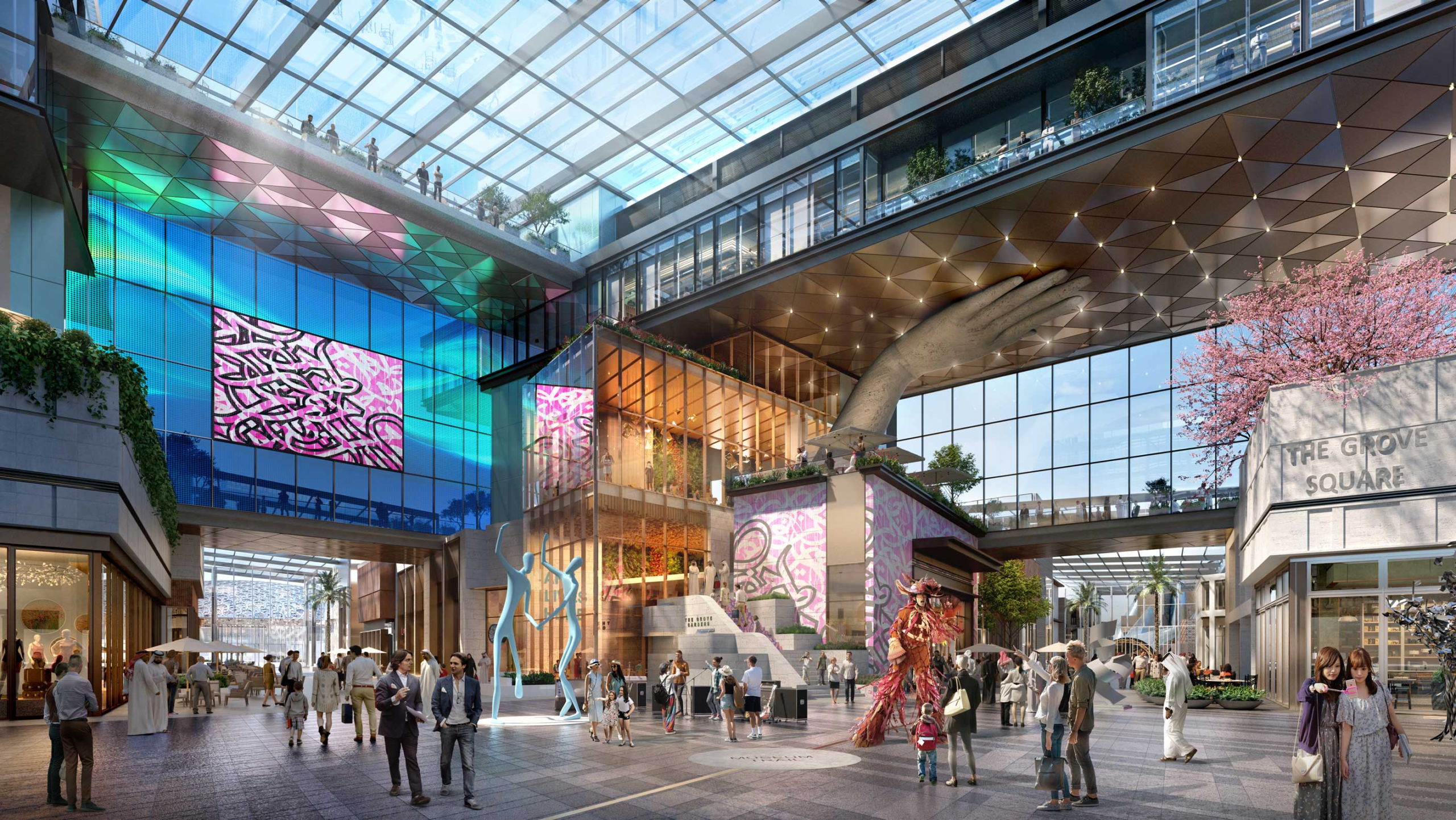
The amenity programme includes an infinity pool, wellness centre, private cinema, co-working spaces and Le Salon Détente — a residential lounge designed for the kind of relaxed social interaction that the best residential developments facilitate naturally rather than forcing. Residents also receive the Grove Circle Membership — exclusive access to the Louvre Abu Dhabi with dining discounts and invitations to cultural events that position the museum not as something to visit occasionally but as an extension of daily residential life.
Why Saadiyat Island specifically.
Abu Dhabi's investment in Saadiyat Island as a cultural and residential destination has been consistent, sustained and increasingly vindicated by the international recognition the district has received.
The Louvre Abu Dhabi opened and was immediately acknowledged as a world-class institution. The Zayed National Museum is under development. The Guggenheim Abu Dhabi is progressing. The district is becoming what Abu Dhabi intended it to be — a genuine cultural destination with the residential infrastructure to support a community of people who value that environment as the context for their daily lives.
For the internationally mobile buyer the Saadiyat Cultural District offers something that most Gulf residential developments cannot. A neighbourhood with genuine identity. Not just luxury in the abstract — luxury grounded in a specific cultural and intellectual context that gives the address meaning beyond the quality of its finishes and the size of its pool.
The buyers who respond to this proposition are not the same buyers who respond to a marina development or a tower with city views. They are buyers whose lives include art, culture, education and the specific quality of existence that proximity to serious cultural institutions enables. For those buyers Saadiyat Island is not a compromise position — it is the preferred one.
The Abu Dhabi versus Dubai question.
Every South African investor considering the Gulf eventually confronts it. The answer is not as straightforward as most commentary suggests.
Dubai is the Gulf's global city. Its international connectivity, its cosmopolitan population, its commercial energy and its property market liquidity are genuinely superior to Abu Dhabi's in most conventional measurements. The buyer who prioritises transaction volume, price discovery, rental yield and exit optionality will find Dubai the more conventional answer.
Abu Dhabi is a different proposition entirely. As the UAE's capital and the seat of genuine sovereign wealth it operates with a stability and a long-term planning horizon that Dubai's more commercially driven environment does not always match. Its population is smaller, its pace is quieter and its identity is more clearly defined by genuine cultural and institutional investment rather than by the relentless hospitality and entertainment infrastructure that defines Dubai's appeal.
The Louvre Residences buyer is almost certainly an Abu Dhabi buyer rather than a Dubai buyer who settled for Abu Dhabi. The Cultural District's proposition — living within one of the world's most significant concentrations of museum and cultural infrastructure — is specific enough that it will not appeal to everyone and specific enough that it will appeal intensely to the right buyer.
That specificity is commercially valuable. Properties with genuine identity in genuinely distinctive locations hold their value and attract their buyer more reliably than generic luxury developments that compete primarily on specification and price.
The investment dimension.
Aldar Properties is not a boutique developer with an unproven track record. It is Abu Dhabi's leading listed real estate company, responsible for some of the emirate's most significant residential, commercial and mixed-use developments over more than two decades. Their delivery record, their financial stability and their relationship with the Abu Dhabi government — which is simultaneously their largest shareholder and their most important planning partner — give their projects a credibility and a completion certainty that smaller or less established developers cannot match.
Handover is scheduled for Q4 2025. For buyers considering an off-plan purchase this is a near-term completion that limits the construction period risk that longer off-plan cycles create.
The freehold designation for all nationalities is significant. It means the buyer acquires genuine ownership rather than a long-term lease, and that ownership can be transferred, inherited and sold without the nationality restrictions that apply to some other Abu Dhabi developments.
The rental market on Saadiyat Island benefits from the island's positioning as Abu Dhabi's premium residential and cultural address. The professionals, diplomats, executives and internationally mobile residents who want the Saadiyat lifestyle but have not yet committed to purchase generate consistent rental demand that supports yield for investors who choose to let their residences.
What Malik actually thinks.
The Louvre Abu Dhabi Residences is one of the most conceptually coherent luxury residential propositions in the Gulf. It does not attempt to be everything to everyone. It is a specific product for a specific buyer — someone for whom cultural life is not a weekend activity but the context in which daily existence operates — and it delivers that proposition with genuine conviction and genuine quality.
The entry price point is accessible relative to comparable branded and culturally positioned developments in other international markets. A freehold residence adjacent to a world-class museum in a stable, well-governed Gulf capital at around $300,000 for a studio and proportionally above that for larger configurations represents genuine value for the buyer who understands what they are buying.
The buyer who does not understand what they are buying — who is looking for the Gulf's highest rental yield, the most liquid exit or the most commercially energetic neighbourhood — should look elsewhere. This is not their product and they will not be satisfied with it even if the investment performs well.
The buyer who does understand — who wants an address with genuine meaning in a city with genuine ambition, delivered by a developer with genuine credibility — will find very little in the Gulf that competes with this proposition at this price point.
Living next to the Louvre is not a selling point. It is a way of life.