
Hussain Sajwani: The Billionaire Who Doubled His Fortune
Middle East
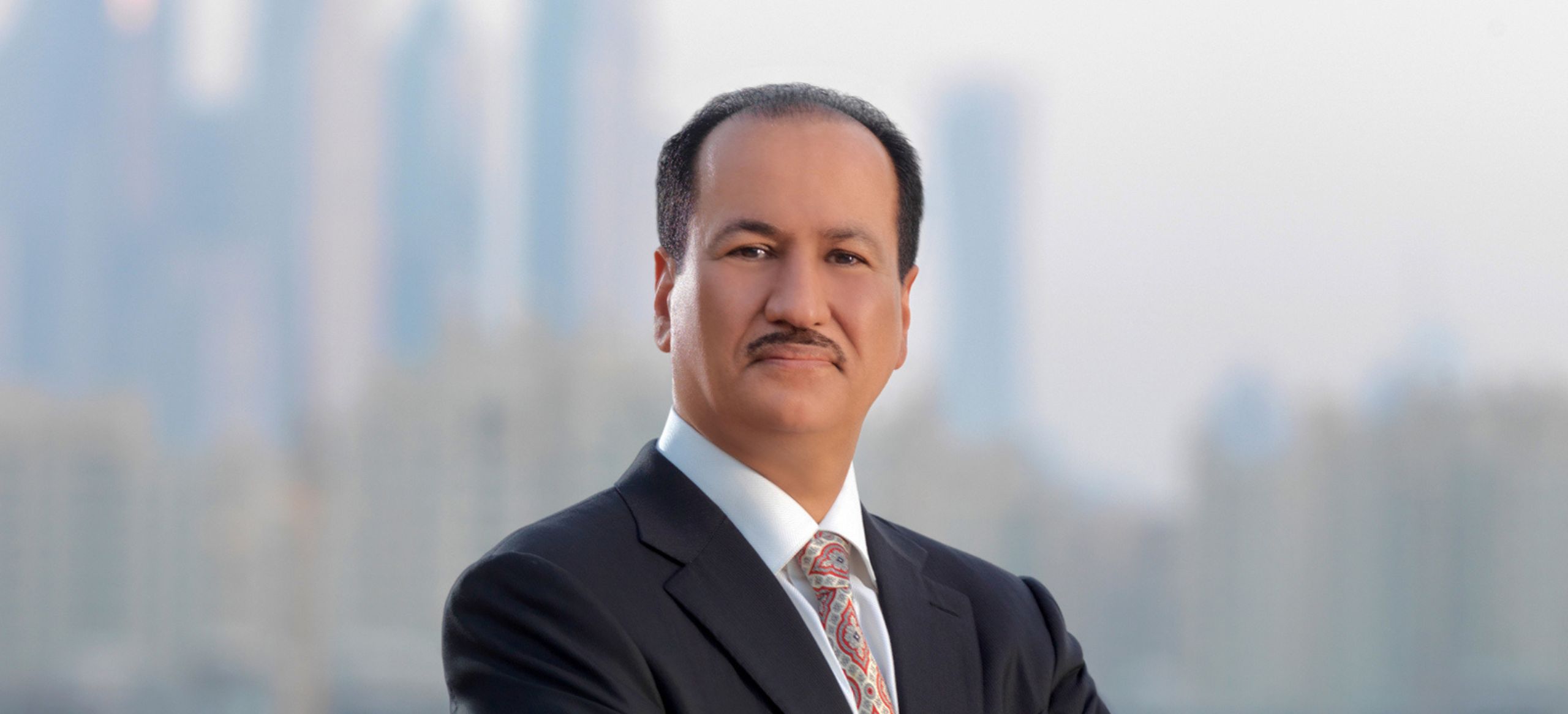
Hussain Sajwani — The Billionaire Who Doubled His Fortune While Everyone Watched
There are developers who build buildings. There are developers who build brands. And then there is Hussain Sajwani, who built an empire in the most competitive luxury property market on earth and made it look easier than it actually was.
Sajwani's net worth doubled in twelve months. From $5.1 billion in March 2024 to $10.2 billion in March 2025. That is not a modest gain. That is not incremental wealth accumulation. That is one of the most dramatic single-year increases in net worth in the Gulf's real estate sector in the past decade, and it happened while the entire market was watching.
The number matters because it reveals something about what is happening in Dubai's luxury property market and who is capturing the value being created. Sajwani, through DAMAC Properties, has positioned his company at the exact intersection of where international capital, luxury branding, and Dubai's relentless growth are colliding.
The trajectory that produced the fortune.
Sajwani founded DAMAC Properties in 2002. That timing was not accidental. It was the moment when Dubai's freehold property model was opening to international buyers and the market was realizing that the city's ambition was genuine, not aspirational. Sajwani saw what others saw but moved faster and built bigger.
DAMAC Hills. Damac Lagoons. The collaborations with Versace, Fendi, Bugatti, and de GRISOGONO that turned luxury fashion brands into residential real estate propositions. These were not safe bets. They were calculated risks that could have failed spectacularly but instead became some of the Gulf's most recognizable branded residence addresses.
In February 2025, DAMAC announced the pricing and settlement of a $750 million senior unsecured sukuk—the company's largest to date. That is not the move of a developer scrambling for liquidity. That is the move of a company with the institutional credibility to raise capital at scale in international markets and deploy it into projects that require years to deliver.
Sajwani also expanded into data centers through EDGNEX Data Centres by DAMAC, with substantial investments across the Middle East, particularly in Saudi Arabia, aiming to deliver 65MW of capacity by 2025. This diversification into digital infrastructure is not a vanity play. It is a recognition that the Gulf's transformation is not just physical but technological, and that the same capital that flows into luxury residences also flows into the digital infrastructure that powers modern economies.
The brand collaborations that defined the strategy.
Sajwani understood something that most Gulf developers did not: that luxury buyers in the 21st century are not buying square metres and amenities. They are buying identity. The buyer who chooses a Versace-branded residence over an unbranded equivalent is not paying for superior construction quality. They are paying for the signal that the address sends about who they are and what they value.
DAMAC's collaborations with Versace, Fendi, Bugatti, and de GRISOGONO were not licensing deals where a brand name gets stamped onto a generic product. They were genuine design collaborations where the brand's aesthetic and identity were embedded into the architecture, interiors, and amenity programming in ways that created products that were genuinely differentiated.
The risk was that the market would reject the premium that these collaborations commanded. The risk was that buyers would see through the branding and refuse to pay 30 to 50 percent more for a product whose underlying construction quality was comparable to unbranded alternatives. That risk did not materialize. The market absorbed the product at the premium, and DAMAC scaled the model across multiple projects and multiple brands.
What the $10 billion valuation reveals.
A net worth of $10.2 billion makes Sajwani the wealthiest property developer in the UAE and one of the five billionaires who appear on Forbes Middle East's 2025 ranking of the region's Most Impactful Real Estate Leaders. The others are Mohamed Alabbar at $2.3 billion, PNC Menon at $3.4 billion, Kabir Mulchandani at $2.2 billion, and Yasseen Mansour at $1.2 billion. Combined, these five billionaires control an estimated $19.3 billion in real estate wealth.
What separates Sajwani from the others is not just the magnitude of the fortune but the velocity at which it grew. Doubling a $5 billion net worth in twelve months requires not just market conditions that are favorable but strategic positioning that captures a disproportionate share of the value being created.
DAMAC's performance in 2024 and 2025 suggests that Sajwani's positioning is working. The company's backlog is robust, reflecting strong market demand and customer trust. Presale rates for DAMAC's luxury projects have been high, particularly in the branded residence segment, which continues to command premium pricing even as supply increases across Dubai.
The CSR dimension that complicates the narrative.
In addition to his role at DAMAC, Sajwani operates the Hussain Sajwani – DAMAC Foundation (HSDF), which has committed AED 5 million to the '1 Billion Meals' campaign and AED 20 million to the Dubai Schools Project. These are not token gestures. These are substantial commitments that reflect a recognition that wealth at this scale carries obligations beyond shareholder returns.
The foundation's focus on education and community support aligns with the broader narrative that the Gulf's most successful developers are not just capital allocators but participants in the social and economic development of the region. Whether that participation is motivated by genuine conviction or by the recognition that social license matters for long-term business success is a question that each observer will answer differently.
What Malik thinks.
Hussain Sajwani's trajectory from $5.1 billion to $10.2 billion in twelve months is not luck. It is the result of strategic decisions made years ago that are now producing asymmetric returns as Dubai's luxury market reaches a level of maturity and depth that it has never previously achieved.
The brand collaborations that defined DAMAC's strategy were risks that could have failed. They succeeded because Sajwani understood that luxury buyers in the Gulf are not just buying property—they are buying identity, status, and the specific quality of life that comes from living in an address that carries meaning beyond its square metres and amenities.
For the internationally mobile buyer evaluating Gulf property, Sajwani's success is instructive. It demonstrates that the branded residence model works when it is executed with genuine design collaboration and operational credibility. It demonstrates that the premium buyers pay for branding is not irrational—it reflects genuine value in markets where identity and status are central to the purchasing decision.
The question for buyers is whether DAMAC's products justify the premium they command. For some buyers, the answer is yes. For others, it is not. But what is undeniable is that Sajwani has built a company and a personal fortune by understanding what luxury buyers in the Gulf genuinely want and delivering it to them at scale.
The $10.2 billion valuation is not the endpoint. It is the current score in a game that Sajwani is still playing. The interesting question is what he does next and whether the strategy that produced the last decade's results will produce the next decade's as well.