
Abu Dhabi’s Dh137 Million Penthouse: A Market Shift
Middle East
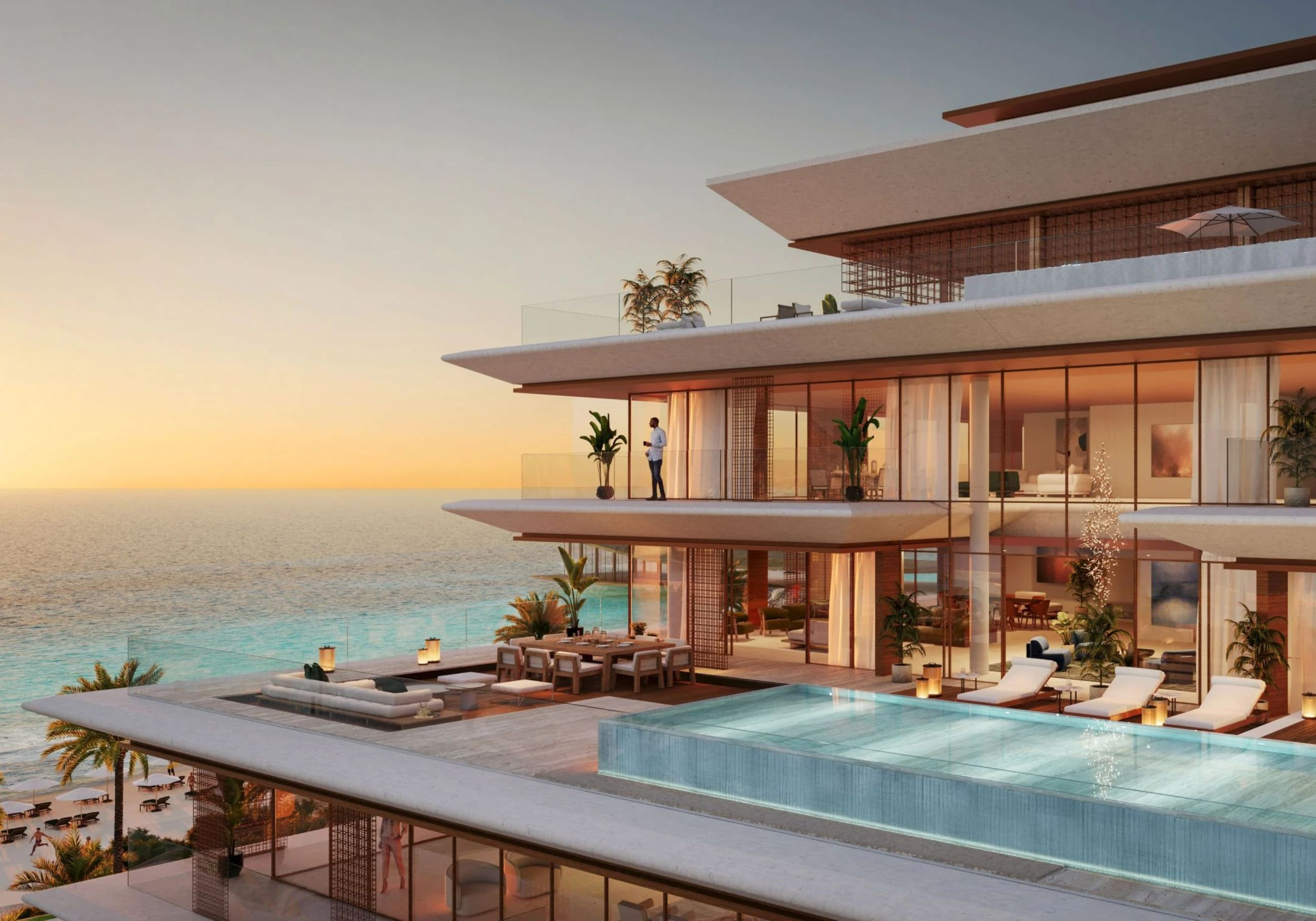
Abu Dhabi's Dh137 Million Penthouse — What the Capital's Most Expensive Home Says
There is a specific moment when a property market stops being aspirational and becomes genuinely premium. It is the moment when the price paid for a single residence crosses the threshold where most buyers—even wealthy ones—stop calculating and start simply acknowledging that this is not their market.
Abu Dhabi reached that moment in early 2025 when a penthouse at Nobu Residences sold for Dh137 million. That is approximately $37.3 million at current exchange rates. That is not a typo. That is not a project value or a development total. That is one home.
The sale matters for reasons that extend well beyond the headline number. It signals that Abu Dhabi has moved past the phase where it competes with Dubai on price or liquidity and into the phase where it competes on product quality and buyer calibre. The internationally mobile buyer who can afford $37 million for a residence is not shopping for rental yield or capital appreciation in the conventional sense. They are shopping for something that cannot be replicated elsewhere.
What the number means.
The Dh137 million sale at Nobu Residences is not an outlier that happened because someone overpaid. It is the leading edge of a market shift that has been building across Abu Dhabi's branded residence sector for the past eighteen months.
In the first four months of 2025 alone, sales of properties priced at Dh7 million and above hit Dh6.3 billion in Abu Dhabi. More than half of those deals were in the super-luxury bracket above Dh10 million. That is not speculative buying. That is genuine demand from buyers whose wealth is denominated in the kind of figures where a $10 million property is a rounding error.
The resale market tells an even more instructive story. Secondary luxury transactions jumped 158 percent year-on-year through April 2025, with nearly Dh3 billion in resale deals recorded. Sixty percent of that came from properties priced above Dh10 million. When the secondary market for properties at this price point shows that kind of velocity, it is a signal that the market has genuine depth, not just momentum at the top.
The buyers driving this shift are not the same buyers who drove Dubai's market in the 2000s. Russian and CIS investors, who dominated Abu Dhabi's luxury segment in early 2024, have been joined—and in some cases replaced—by buyers from the UK, the US, and increasingly from the Gulf's own high-net-worth community who are choosing Abu Dhabi's stability and long-term planning horizon over Dubai's more transactional energy.
The branded residence phenomenon.
Abu Dhabi is launching 25 branded residential projects in 2025. That is a fourfold increase from 2024. The names attached to these projects are not aspirational lifestyle brands borrowing prestige for marketing purposes. They are Waldorf Astoria, Jacob & Co, and Nobu—brands with operational credibility and decades of experience managing properties for clients whose expectations define what luxury actually means.
The branded residence model works because it solves a problem that the internationally mobile buyer genuinely has. When you own properties across multiple geographies and spend time in each only intermittently, the operational burden of maintaining a residence to the standard you expect becomes prohibitive. A brand like Waldorf Astoria or Nobu managing your Abu Dhabi residence means that when you arrive, the property functions at the level you require without your direct involvement.
The premium for this is real, typically 30 to 50 percent above equivalent unbranded properties in the same location. Whether that premium is justified depends on whether you genuinely value not having to think about property management as a part-time job. For the buyer who can afford the Dh137 million Nobu penthouse, the premium is not a consideration. For the buyer considering a Dh15 million branded apartment versus a Dh10 million unbranded equivalent, the calculation requires more thought.
What Abu Dhabi is building toward.
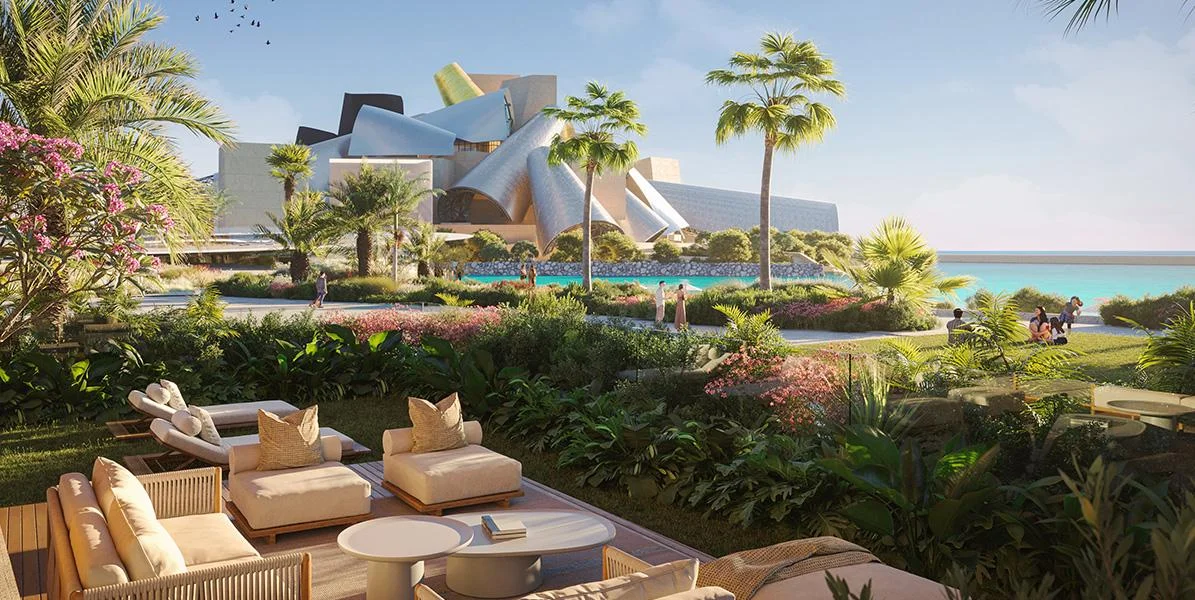
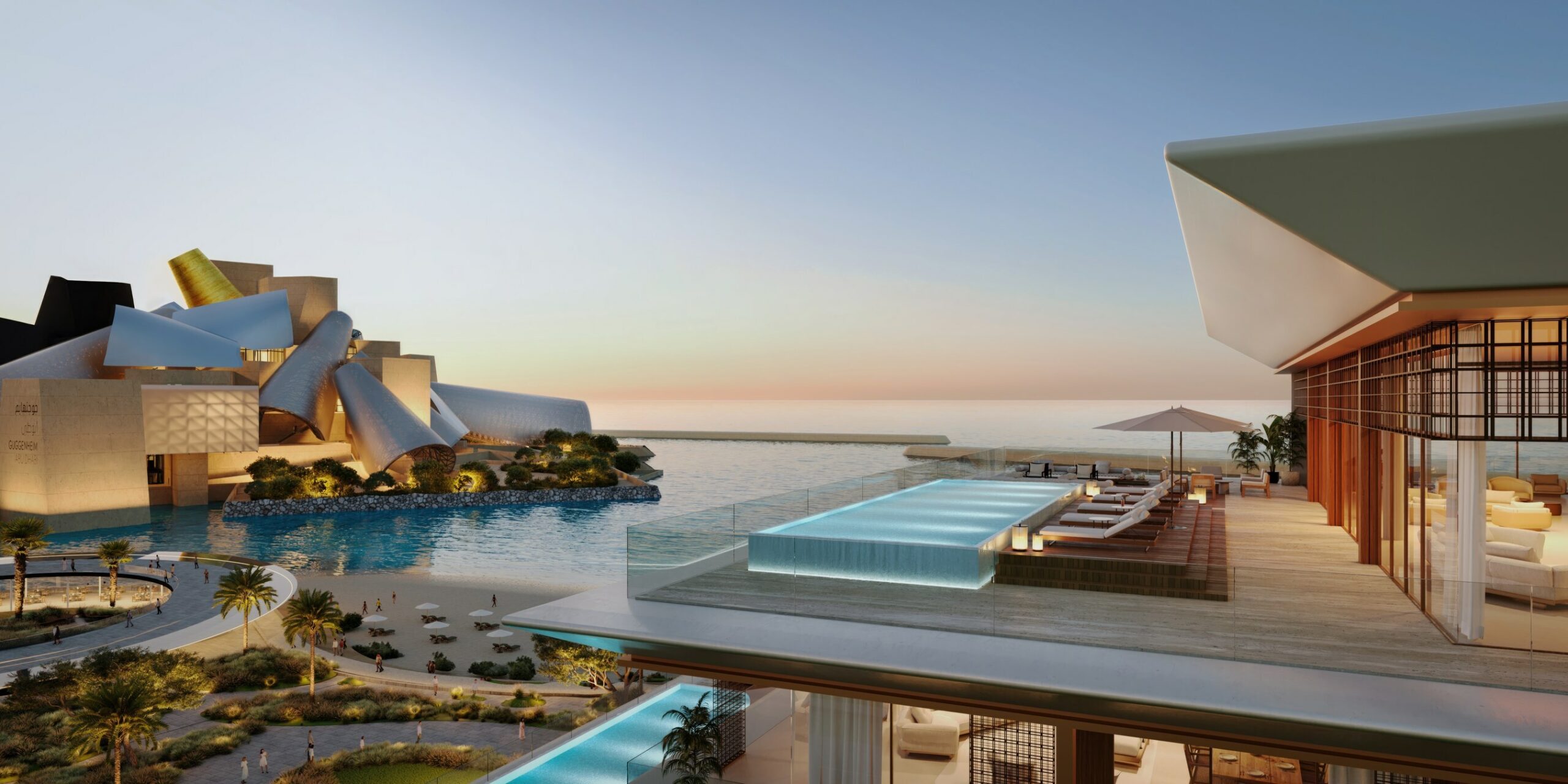
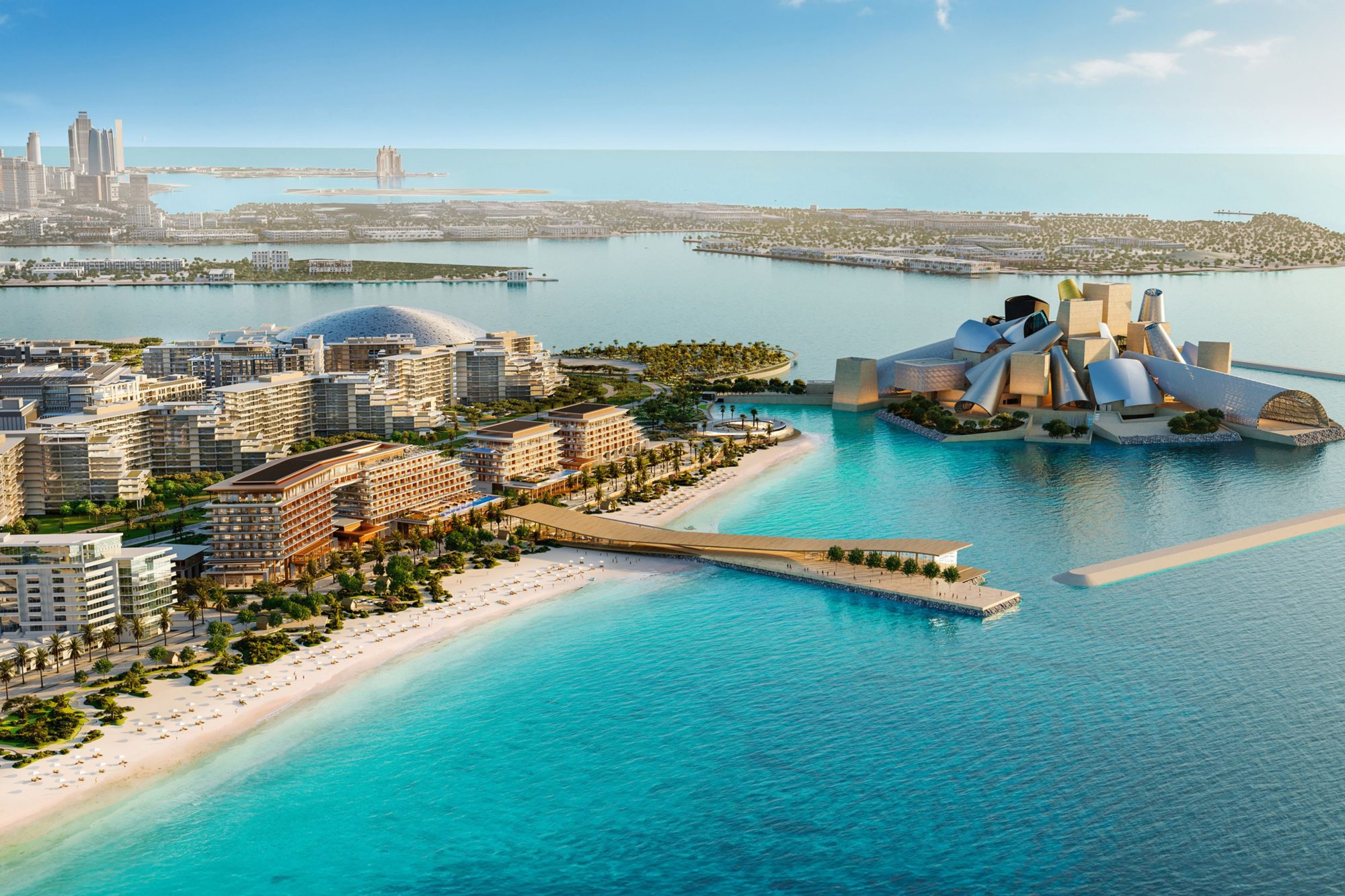
The completion of Guggenheim Abu Dhabi and Zayed National Museum is not a cultural vanity project. It is the deliberate construction of institutional depth that gives the city an identity independent of commerce. When a capital invests at this scale in museums, universities, and cultural infrastructure, it is signaling that it is building for a timeline measured in generations, not quarterly earnings reports.
The Saadiyat Cultural District, where both museums are located alongside the already-operational Louvre Abu Dhabi, is where this strategy becomes tangible. The district is not an entertainment precinct. It is a genuine concentration of world-class cultural institutions that gives Abu Dhabi something Dubai does not have and cannot replicate—an intellectual and cultural identity that exists independently of its commercial offerings.
The buyer who responds to this proposition is not the buyer who wants the highest rental yield or the most liquid exit. They are the buyer whose life includes art, culture, education, and the specific quality of existence that proximity to serious institutions enables. For that buyer, Abu Dhabi in 2025 is not a compromise position relative to Dubai. It is the preferred one.
The risks that serious buyers need to understand.
The post-World Cup supply correction that hit Dubai in 2009 is a lesson that Abu Dhabi's developers claim to have learned. The capital's approach to development has been more measured, more controlled, and more aligned with government planning than Dubai's more market-driven model. But 25 branded residential projects launching in a single year is not measured. It is aggressive.
The risk is that the market absorbs the first wave of branded residences at premium pricing because they are genuinely scarce and genuinely differentiated. The risk is that the fifth and tenth and fifteenth projects struggle to command the same premium because the novelty has worn off and the market has realized that not every branded residence delivers the same operational quality or lifestyle proposition.
The buyer considering Abu Dhabi in 2025 needs to distinguish between the city's genuine strengths—its stability, its long-term planning, its cultural investments—and the marketing narratives that every branded residence developer will deploy. Not every project with a luxury hotel brand attached deserves the premium it is asking. Some do. Most do not.
What Malik thinks.
The Dh137 million Nobu penthouse is not a sign that Abu Dhabi has lost its mind. It is a sign that Abu Dhabi has found its market. That market is not the speculative buyer looking for quick appreciation or the investor optimizing for rental yield. It is the buyer whose wealth is measured in hundreds of millions or billions and who values stability, institutional depth, and cultural infrastructure over transaction velocity.
That buyer exists. They are active in this market. And Abu Dhabi is building for them in a way that Dubai has historically not prioritized. The question for the internationally mobile buyer who is not operating at the Dh137 million level is whether the same dynamics that make Abu Dhabi compelling at the ultra-high end translate down to the Dh5 million to Dh20 million bracket where most premium buyers operate.
The answer is yes, but only if you understand what you are buying. Abu Dhabi is not cheaper than Dubai. It is different. If the difference matters to you—if you value cultural infrastructure over nightlife, institutional stability over commercial energy, long-term planning over market liquidity—then Abu Dhabi in 2025 is the right bet. If those distinctions do not matter to you, Dubai is still the more conventional answer.
The Dh137 million penthouse is not where most buyers will enter this market. But it is proof that the market at the top is real, is deep, and is here to stay.