
Why Four Seasons chose Jeddah
Middle East
Dubai has had the world's attention for twenty years. Abu Dhabi has positioned itself as the Gulf's cultural and financial alternative. Riyadh has announced Vision 2030 with the kind of ambition that makes other capitals feel modest.
And then there is Jeddah. Quietly, consistently and with a self-confidence that does not require anyone else's validation, Saudi Arabia's second city has been building the infrastructure of a genuinely world-class destination — and the global luxury brands have been watching.
When Four Seasons announces a new property it is never arbitrary. The world's leading luxury hospitality company does not commit capital to markets based on optimism. It commits based on evidence — evidence of genuine demand, genuine growth and a genuine future for the kind of traveller and resident whose expectations define what luxury actually means. Four Seasons Hotel and Private Residences Jeddah at the Corniche is that kind of commitment.
What is being built.
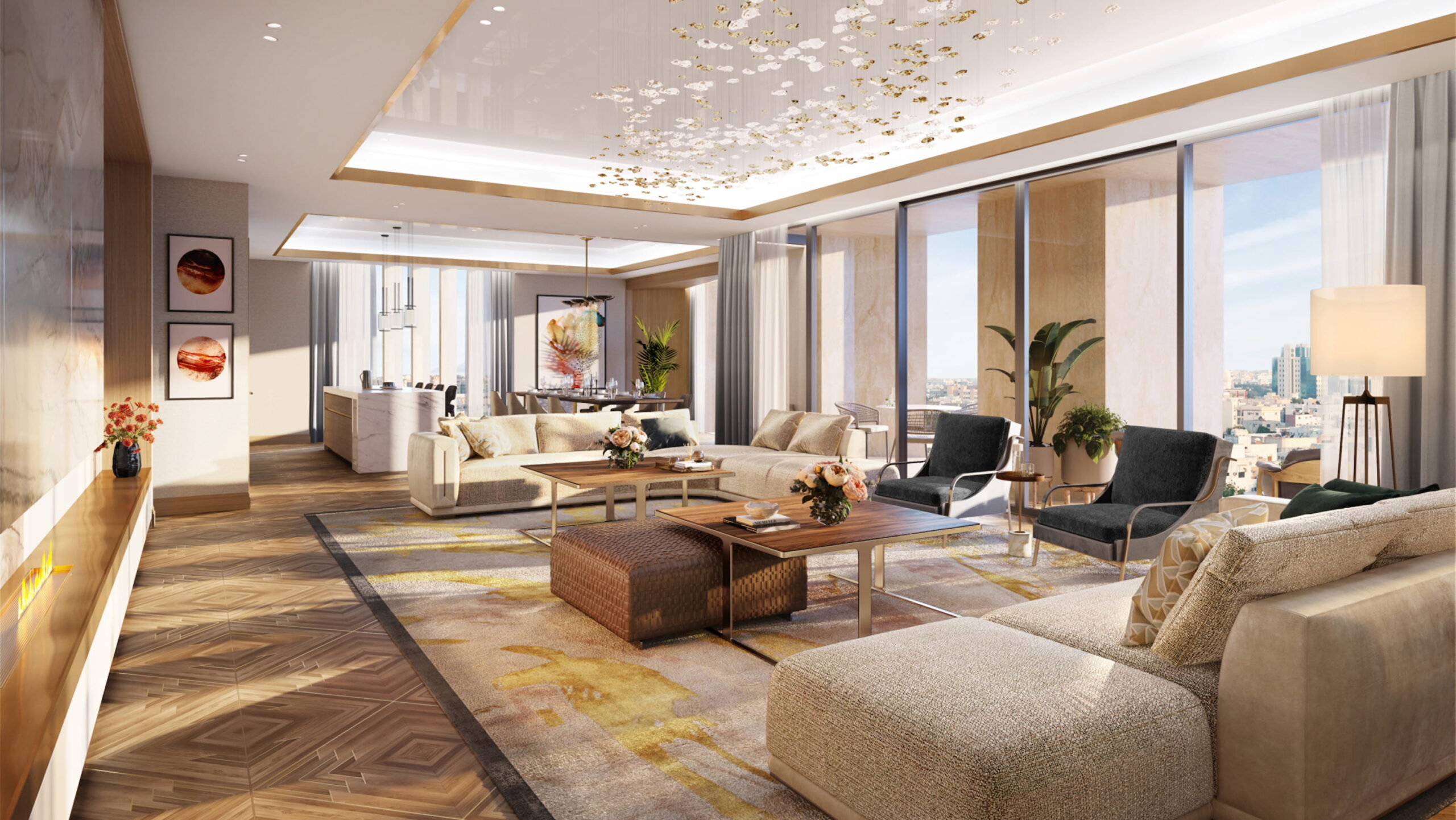
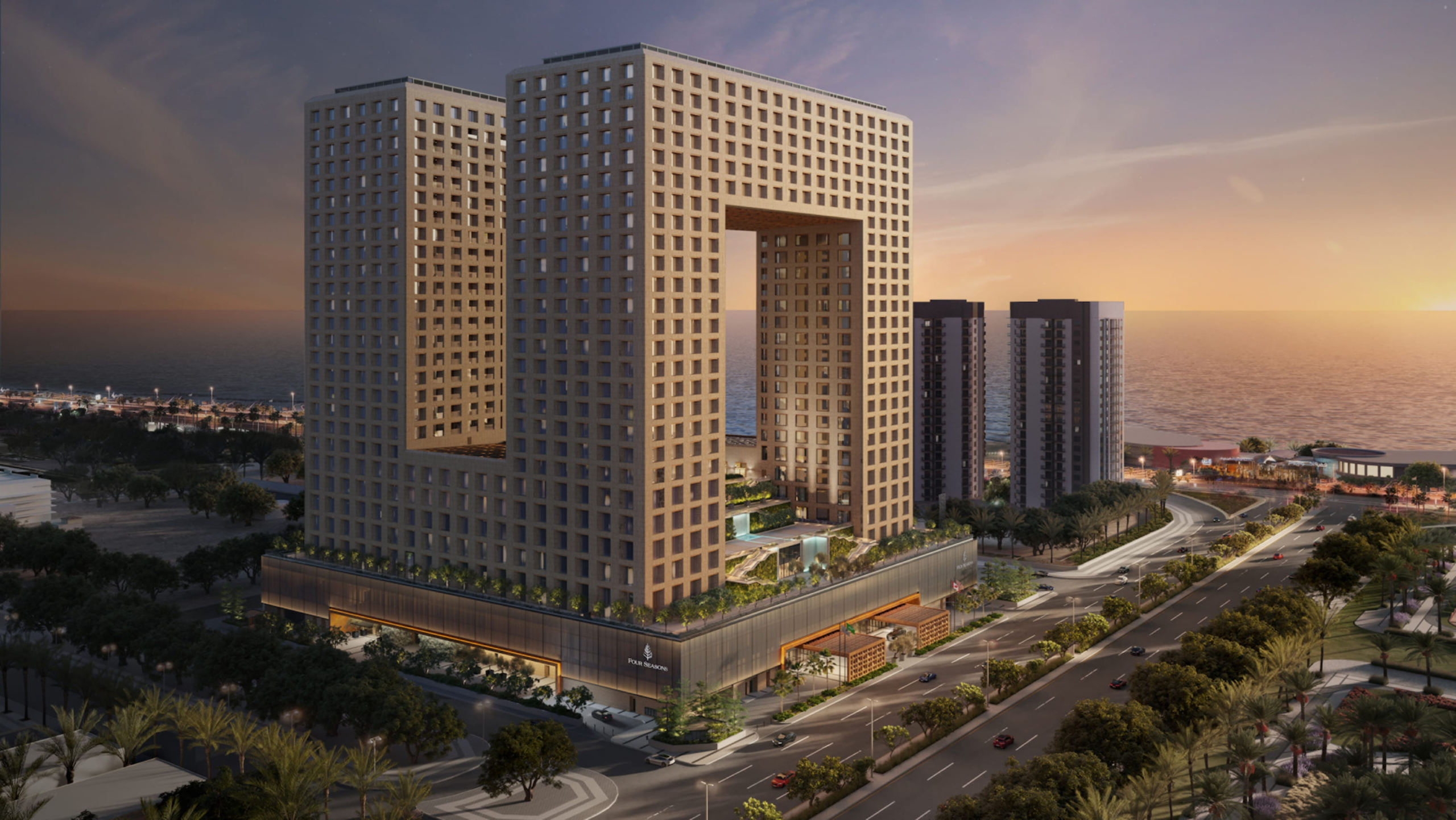
The project sits within the Corniche District — Jeddah's coastal spine, where the Red Sea meets one of the Middle East's most historically layered cities. 269 hotel rooms and suites. 21 serviced apartments for short and long term stays. 64 private residences including two penthouses. Architecture by Skidmore Owings and Merrill — the firm responsible for some of the world's most significant buildings — and interiors by Richmond International.
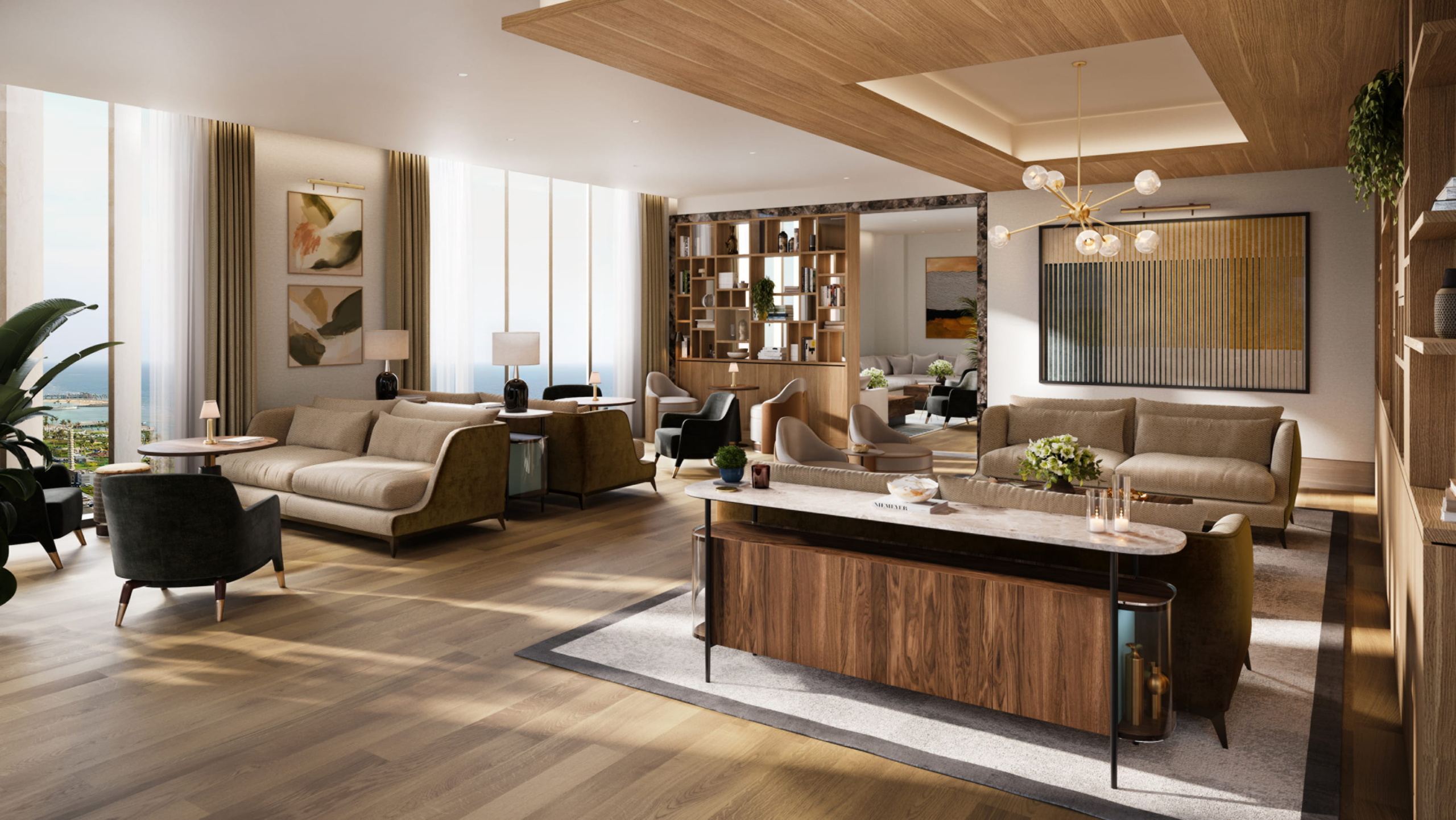
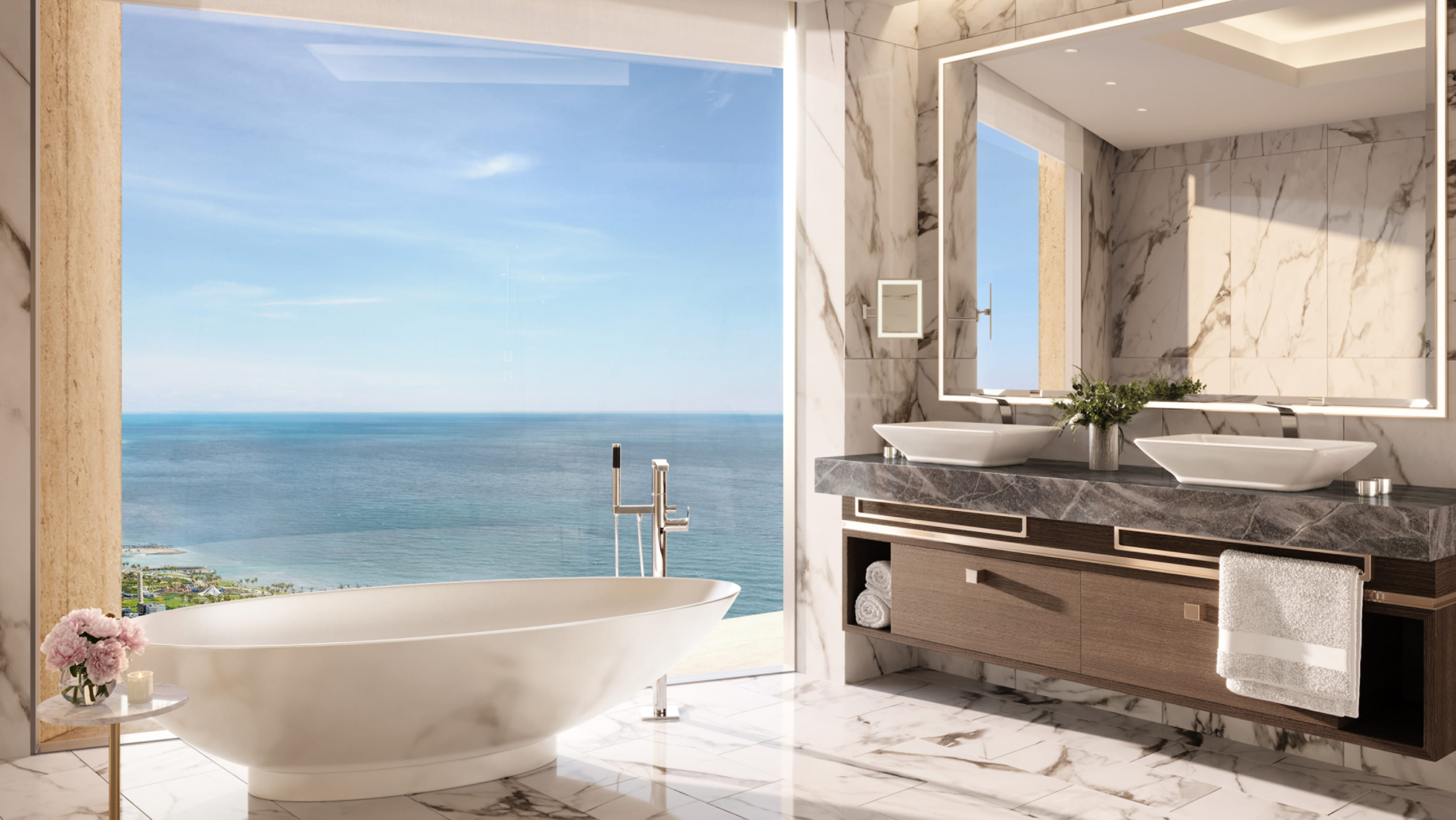
The residences range from one to five bedrooms across 300 to 1,065 square metres. The amenity offering includes multiple restaurants with open-air terraces, a shisha lounge, a cigar lounge, separate pools and spas for men and women, meeting and event space totalling 4,000 square metres and the full Four Seasons residential management infrastructure — a Director of Residences, a dedicated residential team, property management services that operate whether the owner is in residence or on the other side of the world.
For the internationally mobile buyer the property management dimension is not a luxury. It is a necessity. An asset that requires active management from a distance is an asset that generates anxiety rather than return. Four Seasons managing the residence to their own standards is the proposition that makes the investment genuinely passive — and genuinely premium — rather than theoretically passive and practically complicated.
What the location means.
Jeddah is not Riyadh. That distinction matters for the international property buyer more than most commentary acknowledges.
Riyadh is Saudi Arabia's political, administrative and increasingly financial capital. Its transformation under Vision 2030 is extraordinary and real. But it is fundamentally an inland city being rebuilt as a statement of national ambition — extraordinary in scale, somewhat abstract in terms of the daily lived experience it offers the internationally mobile resident.
Jeddah is a port city with 2,000 years of history as a trading hub. It has the cosmopolitan texture that comes from centuries of contact with the outside world. Its relationship with the Red Sea is not architectural — it is cultural. The city breathes differently than Riyadh because it has always been open to what arrives from across the water.
The Corniche District is Jeddah's most significant urban asset. The waterfront is genuinely extraordinary — the Red Sea here has a quality of light and colour that most bodies of water cannot match. The proximity to Al-Balad — Jeddah's UNESCO-listed historic district — gives the project a cultural context that new-build Gulf developments frequently lack. The Formula 1 circuit, the Tahlia Street shopping district and the key business hubs that the project's documentation references are not marketing embellishments. They are real, they are operational and they represent the full-spectrum urban offer that serious residents require.
What it signals about Saudi Arabia's property market.
Saudi Arabia's domestic property market has historically been inaccessible to foreign buyers in the way that Dubai's market has been accessible for decades. The reforms that have changed this — the introduction of foreign ownership rights in specific zones and developments, the visa reforms that allow international visitors and residents to engage with the Kingdom on terms that were not previously available, and the deliberate positioning of projects like Four Seasons Jeddah as gateways to the broader Saudi offer — are still relatively early in their implementation.
Early is where the opportunity is. The buyers who understood Dubai's transformation in 2002 and 2003 — before the freehold ownership rights were established, before the infrastructure that now seems obvious was built, before the international community that now makes the city feel like home had arrived — made the returns that later buyers were only able to read about.
Saudi Arabia's property market is not Dubai in 2003. It is significantly more complex, more regulated and more dependent on specific government policy decisions that create and can also restrict opportunity. The international buyer who approaches it with Dubai assumptions will be frequently surprised and occasionally disappointed.
But the Saudi Arabia property market is also not the closed, inaccessible, foreigner-excluding environment it was ten years ago. It is a market in genuine transition, being opened deliberately and systematically by a government that understands what international capital and international talent require to commit. Four Seasons' commitment to Jeddah is one data point in a pattern that serious investors track carefully.
The branded residence model — why it matters for the international buyer.
Four Seasons Private Residences Jeddah at the Corniche represents a specific and increasingly significant property category — the branded residence — that deserves careful consideration from international buyers evaluating Gulf property.
The branded residence model involves the purchase of a private home within a hotel development managed by a luxury hospitality brand. The brand provides the management infrastructure, the service standards, the amenity access and the international recognition that makes the asset both liveable and marketable. The buyer owns the residence outright but benefits from the hotel's operational expertise and brand credibility.
The premium over comparable non-branded properties in the same location is real — typically 30 to 50 percent above equivalent unbranded residences. Whether that premium is justified depends on several factors that vary by buyer and by market.
For the internationally mobile buyer who spends time across multiple geographies and needs an asset that functions at a high standard without intensive personal management the premium is almost certainly justified. Four Seasons managing your Jeddah residence to Four Seasons standards — whether you are in residence, renting the property or simply holding it as a long term asset — is worth the premium if you genuinely value not having to think about property management as a part-time job.
For the buyer whose primary objective is capital appreciation in a developing market the premium requires more careful analysis. The branded residence commands a higher purchase price and generates higher rental yields in most cases. Whether the combination produces superior total returns compared to an equivalent investment in an unbranded property at a lower entry point depends on holding period, market conditions and the specific dynamics of the Jeddah market as it develops.
What Malik's view is.
Jeddah is the right bet in Saudi Arabia for the internationally mobile lifestyle buyer. Not because it is cheaper than Riyadh — it is not necessarily — but because it is more liveable, more cosmopolitan and more connected to the qualities that make the Gulf genuinely compelling as a place to inhabit rather than simply to invest in.
Four Seasons' commitment to Jeddah is a signal that the internationally sophisticated buyer should register. Luxury hospitality brands of this calibre do not make mistakes of this magnitude. They have analysed the market, stress-tested the demand and committed capital on the basis of evidence that the city is ready for what they are bringing.
The private residences at Four Seasons Jeddah at the Corniche will not be the cheapest entry point into the Saudi property market. They are not designed to be. They are designed for the buyer who wants the finest possible product in a market that is genuinely at an inflection point — and who understands that inflection points, by definition, do not wait for certainty before they move.